
Share Milton Bacon Rice's obituary with others.
Invite friends and family to read the obituary and add memories.
Stay updated
We'll notify you when service details or new memories are added.
You're now following this obituary
We'll email you when there are updates.
Select your format and elements to print

IN LOVING MEMORY OF Milton Bacon Rice
Milton Bacon
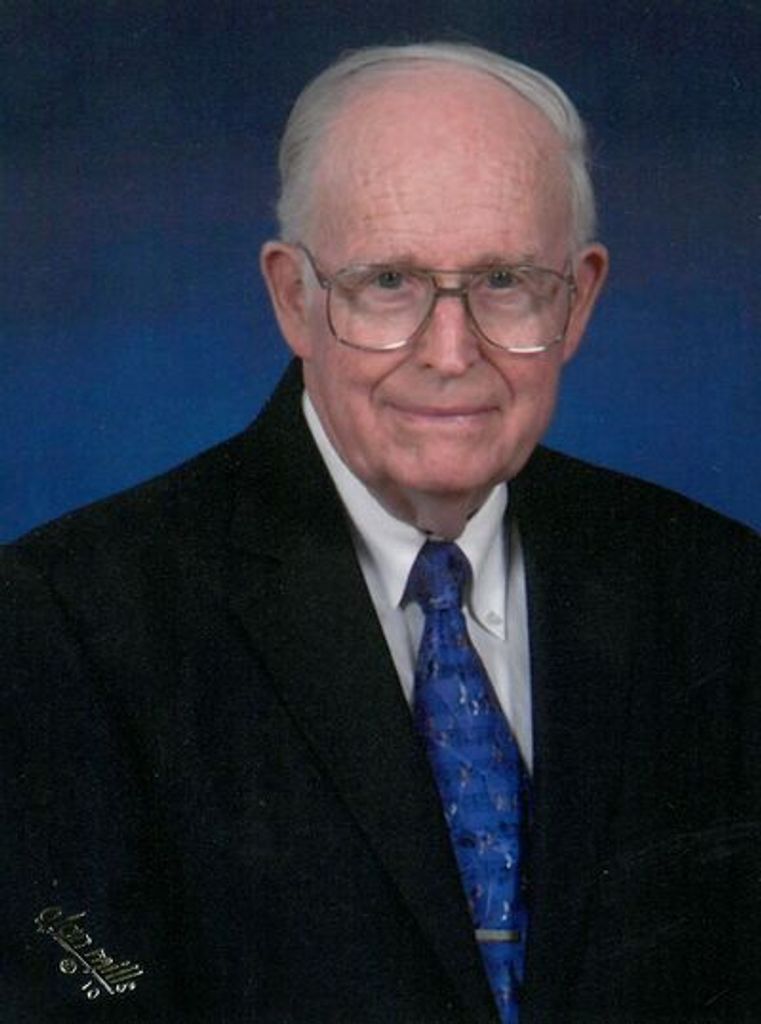
Rice
Jul 19, 1925 — Mar 31, 2020
Dyersburg
Milton Bacon Rice's Obituary
As he climbed into his armored vehicle in 1945, 19-year-old Milton Rice looked out across the valley towards the faint skyline of Beethoven's hometown, wishing he could visit the musician's village instead of continuing on with the 14th Armored Division's push into the heart of Germany. The only man in his squad to survive the entire campaign from Marseille to Munich, Rice rarely spoke of his time during World War II, except in quiet moments, such as listening to his favorite Beethoven symphonies. What happened to the decorated World War II veteran during that campaign would have a profound influence on decisions Rice would make throughout his life, from managing one of the largest farms in Dyer County to helping thousands of local families buy property as the President of Dyer Land Title Company.
A man who never bragged, shied away from attention and personified dignity and grace in all situations, Rice passed away on Tuesday, March 31st at the age of 94.
Milton Bacon Rice was born July 19, 1925, in the Baird-Brewer Hospital across from the First Methodist Church of Dyersburg, where he would become a life-long member, and just down the hill from his home on Elm Avenue. Growing up, he was given free rein to explore the surrounding woodland, often hunting quail in what is now Lattawoods. He attended Jenny Walker Primary School and Dyersburg High School with one of his oldest friends Jack Todd. He took piano lessons as a child but it was in high school that his band teacher gave him a wooden flute to play, sparking his lifelong passion for music.
He knew he would be drafted as soon as he graduated. He was sent to Camp Shelby for Basic Training and then deployed from Fort Campbell in October 1944. He spent the next seven months fighting at the front lines from Marseille in the south of France all the way to Munich.
Rice would often see the faces of his enemy as the Americans took cover in homes directly across the street from buildings occupied by the Germans. He told relatives he spent "the coldest winter of my life" in the Vosges Mountains fighting the Nazis before running from tree to tree in deep snow on New Year's Day 1945. According to the military's official citation, "while his troop was engaged in a withdrawal movement under intense enemy small arms and mortar fire," Rice remained behind. "As the last man to withdraw, he efficiently covered the evacuation and wounded and was personally responsible for inflicting casualties on three of the enemy". He was awarded the Bronze Star for bravery at just 19 years old. A deeply religious man, Rice vehemently insisted the citation had it wrong, explaining that while he did open fire to help his troop escape, he refused to believe he had actually killed a man.
A member of the 94th Cavalry Reconnaissance Squadron, Rice was often in the first wave of the American invasion. He helped liberate three POW camps, including Stalag VII-A near Nuremberg, which held more than 130,000 allied prisoners, including Rice's former Dyersburg classmate Fleming Hodges, an event that touched Rice deeply. He first witnessed the horrors of the extended Dachau concentration camp, before entering the German town of Creussen, where he and his fellow soldiers were quickly surrounded by Nazis. Thinking he would be captured or killed within minutes, Rice was ultimately rescued by the all African-American CCR Rifle Company. These events would leave a profound impression on Rice, who treated all he met with great respect and dignity, regardless of race or religion.
Rice was sent to Paris as a technical sergeant in his signal company following V-Day, where he was given the opportunity to study French at the Sorbonne while attending every concert he could, including a musical performance by Marlena Dietrich.
Upon returning home in 1946, Rice enrolled at Duke University on the GI Bill, where he was a member of the marching band and first chair in the university's concert band and orchestra. He graduated alongside his younger sister Lindsay in 1950 with a degree in mathematics and physics.
After taking additional agriculture classes at the University of Tennessee-Knoxville, Rice cleared and managed multiple farms in Dyer and Lauderdale Counties, including Broadmoor. He partnered with the Fisher and Childress families to farm his family's land in a relationship that has continued for more than a half century. Rice found great joy in fusing scientific principles with farming. Nothing made him prouder than a hard day's work honestly earned, something he always emphasized to every member of his family while teaching them how to pick cotton, raise hogs, ride horses and plow a straight line.
Always fascinated by the history of the land in West Tennessee, Rice firmly established and became president of Dyer Land Title Company in 1963. He spent the next 55 years driving from courthouse to courthouse, pulling out heavy binders to painstakingly examine hand-written records, making sure every transaction he handled was accurate and legal. He drove to his office in downtown Dyersburg each day until just before his death. He managed small and large-scale projects with the help of his long-time office manager Christy White, including the title search for Dyersburg's Dot Foods facility when he was 92 years old.
Throughout it all, Rice played his silver flute at hundreds of weddings, funerals and church services. A steadfast member of the Dyersburg Community College Orchestra for many years, he quietly and anonymously funded many of the orchestra's expenses and endowed the Lindsay Rice Memorial Scholarship, awarded annually to music students at the college.
Rice was an accomplished woodworker, crafting beautiful but practical objects like signs, map cases, bluebird houses and unique squirrel feeders that can still be found throughout the region. He used these same skills to help build a duck club adjacent to the Forked Deer River with longtime Dyersburg resident Ralph Lawson and other good friends.
In spite of being a skilled marksman and bird-caller, Rice never seemed to actually bag a duck. Calling him "the best friend a duck ever had," the avid birdwatcher loved the company of his fellow hunters, but may have loved the ducks even more; somehow "missing" nearly every shot he took.
Rice and Lawson purchased a small tract of land on Lewis Creek, where they used Rice's 1953 Ford Jubilee tractor to plant fields of sunflowers and other bird-loving plants. Rice also ceded over 800 acres of family land located in Fulton to the State of Tennessee as a protected wildlife refuge.
Looking back at Rice's life, his family is particularly struck at his generosity of both time and money, given quietly to those who needed it - from watching over and teaching neighborhood children, to providing funds, to simple presents of hand-picked sunflowers and pecans when they were least expected.
Hit hard by the rapidly declining health of his mother Myra, friends encouraged Rice in 1967 to go north to Reelfoot Lake, hoping he could find some peace fishing. In a moment of serendipity, the 42-year-old Rice found himself at Gray's Camp, where he met the camp's widowed owner, Mrs. Onice Gray Strader. Outgoing and talkative, Strader was everything the reticent and stoic Rice was not. The two instantly became friends. Strader became his safe haven on their quiet fishing trips. They never married, choosing to live in their own homes, all the while "going steady," as she put it, for 52 years.
Rice, whose family settled in West Tennessee in 1837, was the last of his generation, having been predeceased in death by his parents, Ralph Estes and Myra Bacon Rice, his sister Cornelia Linereaux Rice Hopkins and her husband Steve, his brother Ralph Estes Rice Jr. and his wife Deckie as well as their daughter Patricia Rice Nelson and his sister Marianne Lindsay Rice Charlton Layman and her grandson James David Charlton Page.
Uncle Milton is survived by Strader, who recently celebrated her 100th birthday, and his six nephews and nieces – Stephen Hopkins of West Linn, Or., Lea Hopkins Thompson of Potomac, Md., Karen Rice of Idaho Falls, Id., Joy Charlton of Swarthmore, Pa., David Charlton of Asheville, NC., and Ralph Charlton of Toano, Va. – ten great-nephews and nieces and nine great-grand -nephews and nieces. He was laid to rest at the family cemetery in Orysa on April 3rd. Family and friends will gather at a later date for a celebration of his remarkable life following the conclusion of the coronavirus pandemic.
Milton Bacon Rice's Guestbook
Visits: 16
This site is protected by reCAPTCHA and the
Google Privacy Policy and Terms of Service apply.
Service map data © OpenStreetMap contributors